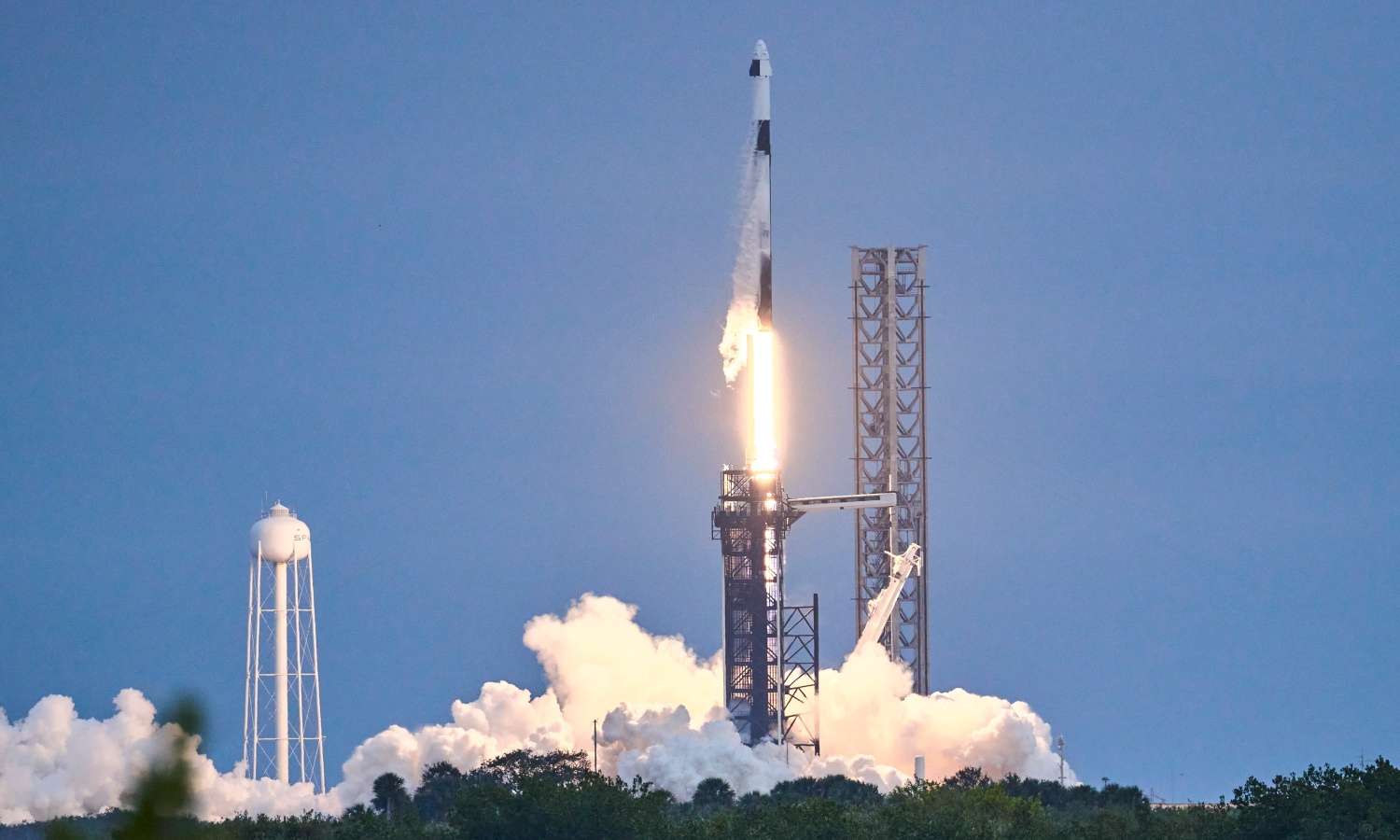
SpaceX breaks its own record. The rocket flew twice in 9 days
Quick return to the launch pad
Rockets from the series Falcon 9 is the main launch equipment of the American company SpaceX. They launch a fleet of Starlink telecommunications satellites into Earth’s orbit. They are also used to transport many other commercial and government loads. Possibility reusing the rocket’s first stage has become the hallmark of the entire company.
Typically, the operator does not have to rush to restart the same machine in a very short time. SpaceX has many working rocket first stages in its fleet. This ensures smooth operations even with dozens of launches a year. Despite the lack of urgency, the company regularly breaks its own records in ground handling speeds.
Reduction of service time
Until recently, the best documented result was almost two weeks. The technical teams needed exactly 13 days, 12 hours, 44 minutes and 20 seconds to launch the rocket again. Such a time was already a very great achievement in the scale of the entire space industry. Currently, however, this result has been significantly reduced.
The latest record for reusing the same module is just 9 days. The fastest flight was made by the first stage of the rocket, marked with the tail number B1088. The machine began its record-breaking cycle on March 12, 2025. It then launched the SPHEREx and Punch satellites into space on behalf of NASA.
Record-breaking copy of B1088
After the first launch, the rocket returned safely to Earth. Then it passed a technical inspection and was prepared for the next task. Just 9 days after the first flight, the equipment was fully ready for operation. SpaceX officially announced on the X website another successful mission carried out on March 21, 2025.
Spaceflight Now quickly confirmed the reports of the American company. Journalists checked the data and determined that the same B1088 module took part in both March missions. This result proves the increasing optimization of engineering procedures. It is not yet known how much this time can be reduced in the near future.
Old plans and new goals
We will probably learn more about the reduction in service time only after a new record is set. Elon Musk’s team has very ambitious assumptions in this matter. Already in 2017, the company set itself a goal daily standby time. This plan assumed re-launching the module within 24 hours of its landing.
At the moment, this has not been achieved with the Falcon 9 rocket fleet. However, the head of the company is known for implementing bold visions. In the past, he has repeatedly mentioned long-range plans to conquer space. He talked, among other things, about the project of building a city on the surface of the Moon. Achieving a daily readiness time for the rocket seems very important in the context of these plans.