
Polish Scientists with a Crazy Idea. See What They Came Up With
Talking vegetables are just a story from a book or a movie screen? The latest research by Polish scientists shows that this is not necessarily true. Plants have been eavesdropped.
Since childhood, we have been encountering an extraordinary mystery. Sometimes we wonder “What are the willows rustling about?”, sometimes we hear how “A tomato climbed a pole and mocks the gardener.” It so happens that in the latter case it is not only about a fairy tale, but also about what might really be happening in a greenhouse with the popular red vegetables. Scientists from the AGH University of Science and Technology in Kraków, together with employees of the Department of Horticulture at the University of Environmental and Life Sciences in Wrocław, are testing whether plants communicate through sound. It turns out that it is absolutely possible.
Stressed Tomatoes
Sound waves emitted by vegetables can be eavesdropped in cases of, for example, water shortage, excessive drying, or pest attack. They emit sounds that are inaudible to the human ear, which may indicate that they are in a stressful situation. But acousticians from AGH appeared at the growers’, who helped to lift the veil of mystery related to the sounds of plants. Information and conclusions from experiments may be a clue on how to take even better care of, for example, large-area crops and react faster to changes related to irrigation or pest protection.
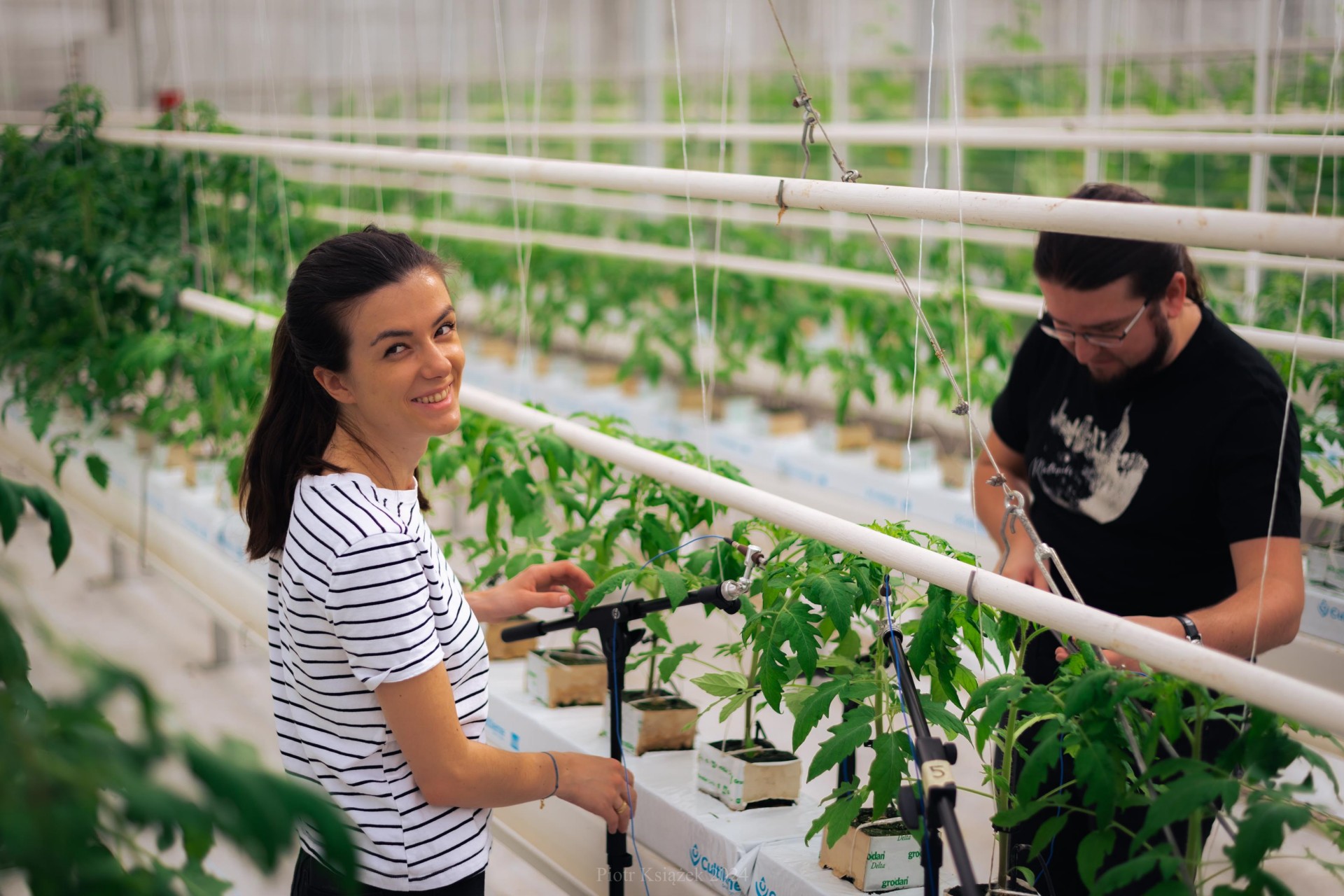
The first stage of the research was listening to small tomato plants planted in a greenhouse. It was already at this stage that measurements showed that the plants were actually emitting ultrasonic pulses and their frequency varied depending on the time of day. The plants generated more impulses during the day – points out Dr. Bartłomiej Chojnacki from the Laboratory of Technical Acoustics at AGH, one of the scientists involved in the study.

The sounds generated by plants are the so-called impulse noise, which, as explained by a team of acousticians from AGH, is easy to distinguish from, for example, constant noise generated by lighting, equipment or people.. In this way, these results confirmed the few studies on plants that had been done so far. (The results of research conducted on plants were published by a team from Tel Aviv University.) However, the research did not end there.
Measurements in the AGH anechoic chamber
The next stage was carried out in fully controlled conditions, in an anechoic chamber at the Laboratory of Technical Acoustics at the AGH University of Science and Technology in Kraków. The measurements were performed using microphones for bioacoustic applications. Thanks to such equipment, scientists are able to record sounds above 200 kHz. The measuring range of the equipment allows for experiments with different plants that emit sound pulses at different frequencies. The tested tomatoes produced noise in the 20-50 kHz range.
However, grains or vines, for example, require completely different equipment with much greater sensitivity to ultrasound and a wider frequency range. According to the literature known to us, these plants emit pulses in the range of 80-150 kHz
– explains Dr. Eng. B. Chojnacki from AGH.
The second stage of measurements, carried out in the anechoic chamber at AGH, lasted several weeks. Scientists placed the plant in a controlled acoustic environment with a background noise level below 0 dB (decibels) and no additional sound reflections, and then placed eight specialized microphones around the plant.
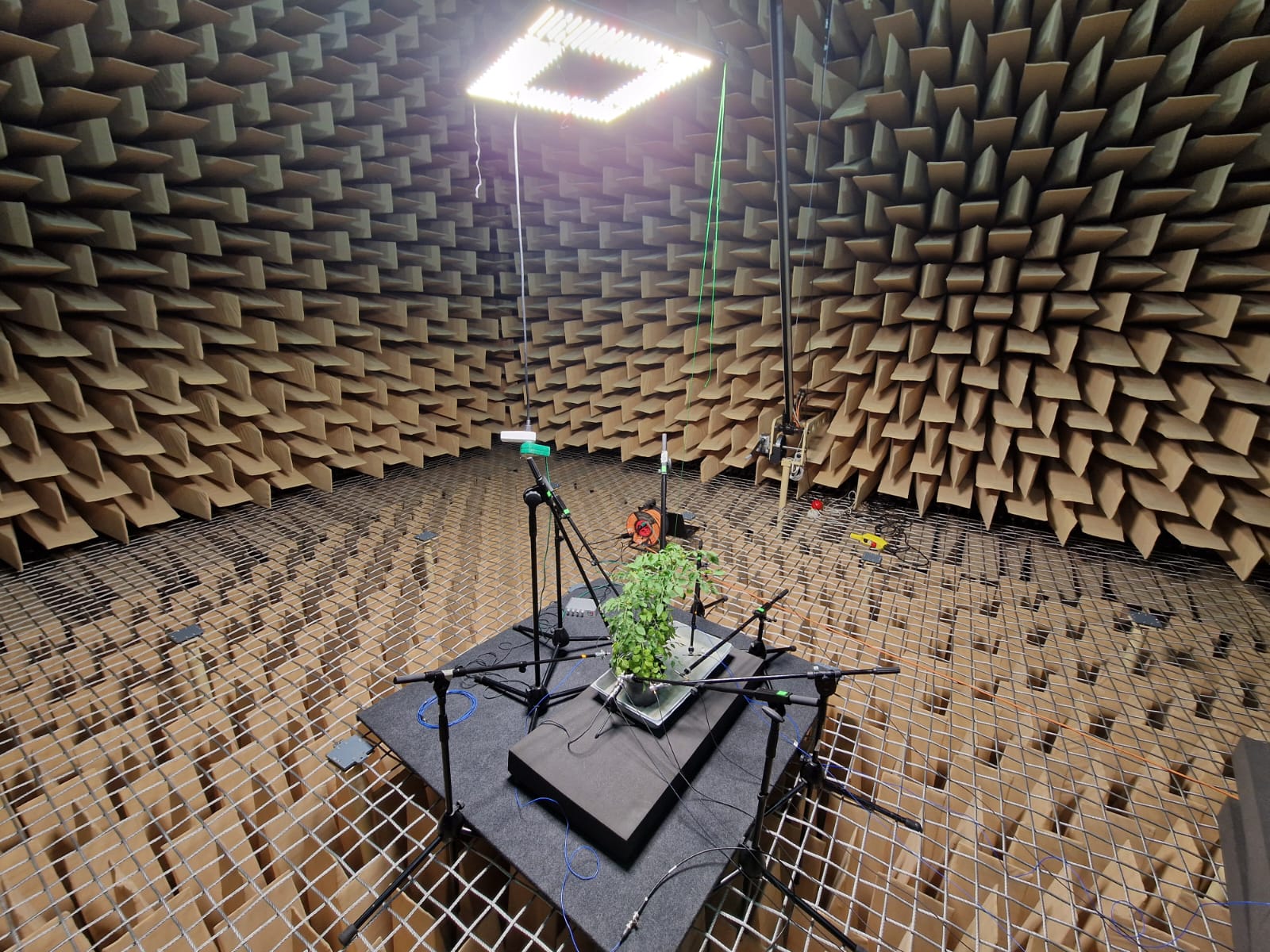
Several seedlings were tested, first maintaining appropriate fertilization and watering to obtain control data, and then drying the plant until it was completely dry. Initial analysis of data obtained from measurements in the Technical Acoustics Laboratory indicates that, similarly to greenhouses, tomatoes emitted sound pulses at a level of 30-50 kHz. Pulses intensified when the plant was dried out. Based on the research, it will also be possible to determine which element of the plant emits the sound and then conduct a detailed analysis of its origin.


