

WASP-107b is a popcorn planet. You won’t see anything weirder today
The universe still holds many interesting facts that may surprise us. This is the planet WASP-107b, which is compared to popcorn due to its light weight and fluffiness. Now it turns out that this object is even more strange.
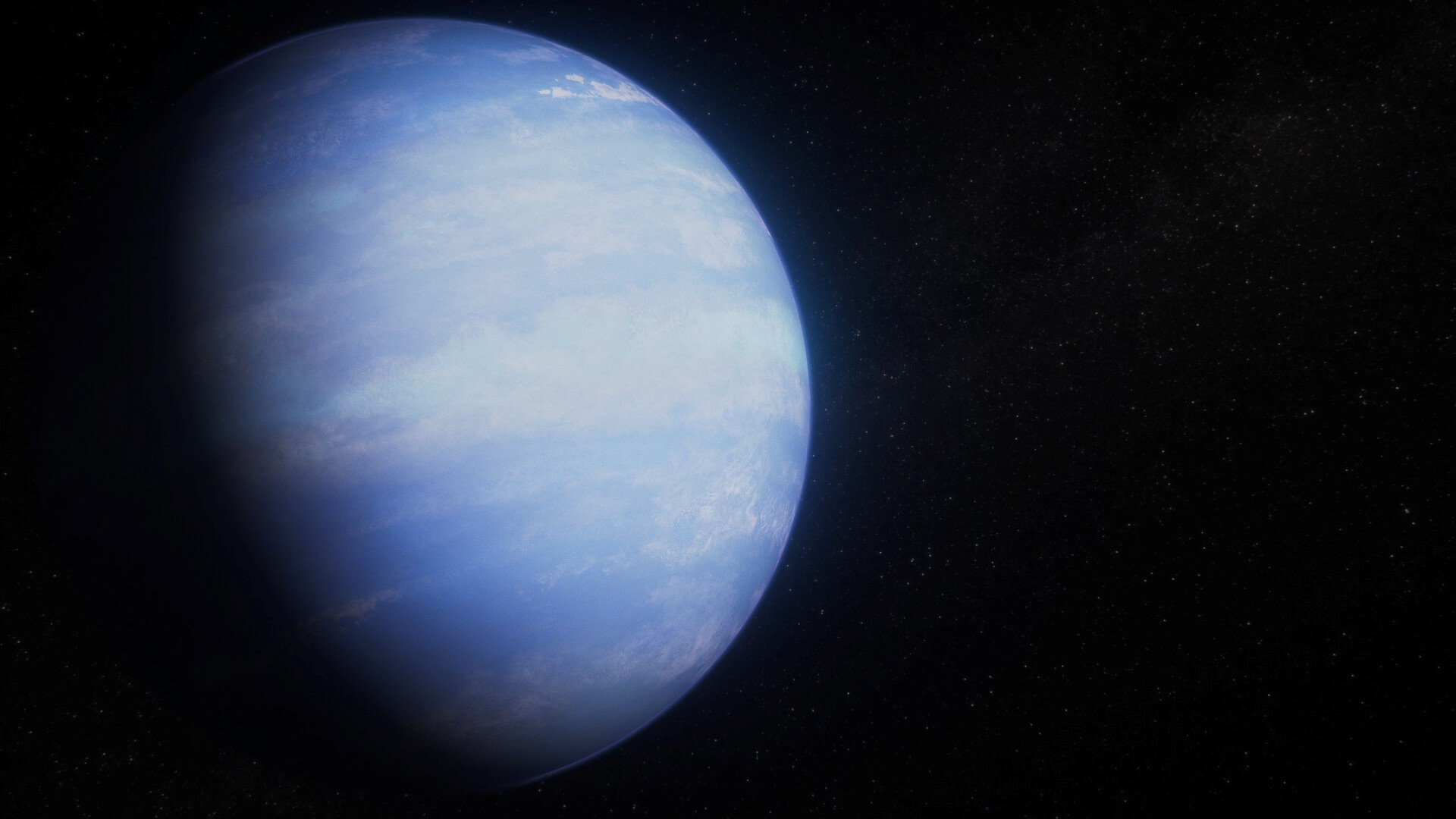
WASP-107b is an exoplanet that orbits a star 200 light-years away. Its structure itself attracts attention – its size is almost equal to Jupiter. At the same time, its density is ten times smaller than the largest planet in the solar system. But now scientists have discovered something else about it. WASP-107b is also expected to have an asymmetric atmosphere. What could this mean?
A space freak
This discovery was made using the star around which this strange exoplanet orbits. During the transit, i.e. the moment when WASP-107b was on the line between observers and its sun, its atmosphere was observed. It was thus confirmed that the asymmetry is caused by the heat of the star heating one side of the exoplanet, causing it to change its size. The new study also found a slight difference in cloud transparency. This is also interesting because, according to the Science Alert website models suggest that WASP-107b should not have this type of asymmetry.
This new fact joins the already numerous list of strange facts about the exoplanet. Discovered in 2017, the object has a size and density suggesting a composition similar to cotton candy. It is also extremely close to its star, which is an orange dwarf. Thanks to this WASP-107b is very hot – up to 500 degrees Celsius. As if that wasn’t enough, it is also tidally locked, which means that half of the planet is constantly daylight and the rest is nighttime – just like on Earth’s Moon.
It is also worth emphasizing that this is the first time that the east-west asymmetry of any exoplanet has ever been observed during the transit of a star from space. But probably not the last one either. This method could help reveal more bizarre exoplanets in the future. The researchers responsible for this discovery also announce further observations and analyzes of WASP-107b itself to find out how this asymmetry affects the chemical composition of the exoplanet.


