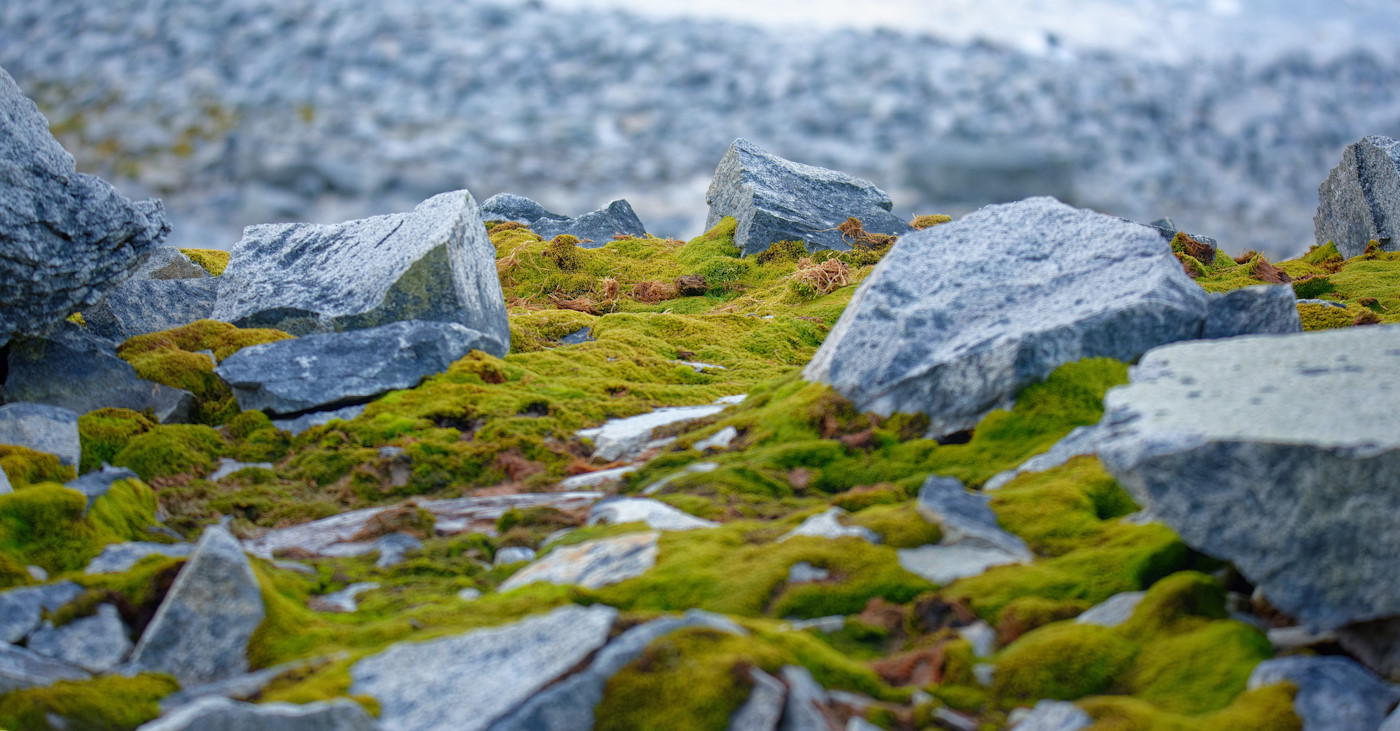
Something strange is happening to Antarctica. Irrefutable evidence of climate change
Recent research by climate scientists has revealed an unprecedented rate of climate change in Antarctica. The continent is quickly covered with greenery.
Green Antarctica
Back in 1986 Only 1 km2 of the Antarctic Peninsula was covered with vegetation, and in 2021, practically 13 km2. The latest data comes from a study by scientists from the universities of Exeter and Hertfordshire and the British Antarctic Survey scientific institute, supported by satellite photos of the Antarctic Peninsula, i.e. the part of Antarctica that meets South America and Cape Horn. Research has shown, among other things, that mosses are 10x more common than 40 years ago.
Interestingly, the process covering the continent with vegetation has accelerated significantly, by over 30% between 2016 and 2021. It is true that the landscape of the continent is still dominated by snow, ice and rocks, but this relatively small area is expanding at a drastic rate – noted Thomas Roland, a climatologist from the University of Exteter, who in a statement for CNN emphasized:
Our research confirms that there is no place on Earth where the effects of climate change cannot be felt.
“Even the most remote and isolated territories are changing, and these changes are even visible from space,” Roland added.
It is worth emphasizing that This summer (2024), Antarctica experienced record temperatures, up to 28 degrees Celsius above average.
The greener the Antarctic Cape becomesthe more soil and region will be formed will be more and more favored invasive plant specieswhich can threaten homeostasis local ecosystem.
Increased vegetation level it can also negatively impact the ability to reflect solar radiation back into spacebecause darker surfaces absorb more heat.
The next step for scientists is to study how plants establish themselves on recently exposed patches of land as a result of retreating glaciers. Scientists believe that the above changes may also contribute to the increase in areas covered not only with moss, but also with grass, lichens and algae.