
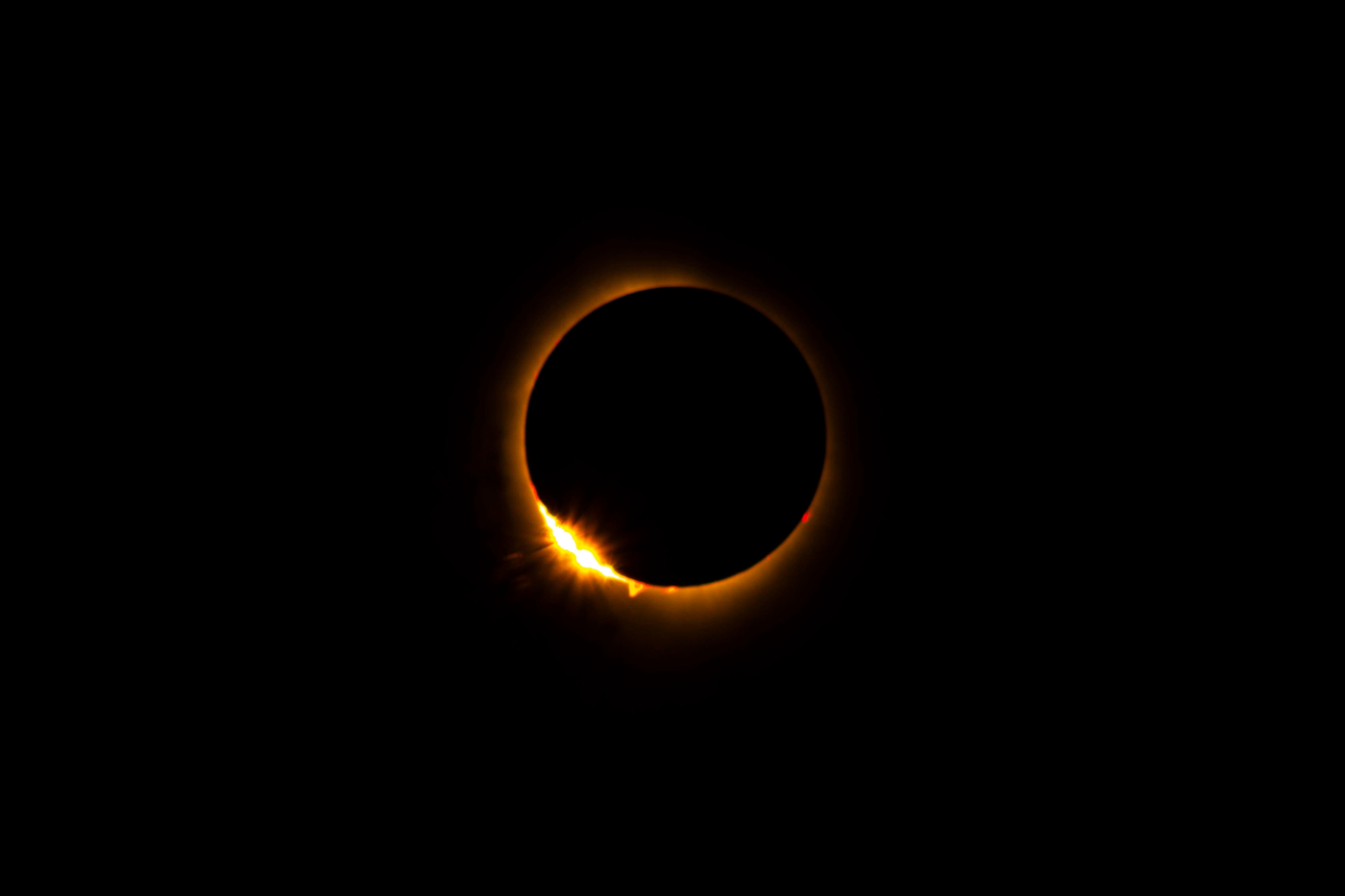
Complete eclipse on demand. No one had thought of this before
The European Space Agency will soon launch a new mission. It will involve triggering a complete solar eclipse on demand.
There is a method to this madness
The European Space Agency (ESA) will soon launch a pair of satellites. They will fly together in relatively close proximity and orbit the Earth. They are to be connected to each other by a system of lasers and light sensors.
As a result they are intended to achieve the effect of a total solar eclipse, which will last up to several hours. To calm down – effect will only be local. The satellites will be 144 meters apart and Once they are in the right orbit, one of them will release a disc that will block the other’s view of the Sun for six hours.
Thus, one of the satellites will serve as a 144-meter observatory. This is a revolution for scientists because complete solar eclipses, seen from Earth, only occur when the Moon appears in front of the Sun, blocking its blinding glare and allowing researchers to observation of the so-called the solar corona, i.e. the outermost atmosphere of the Sun, which extends for millions of kilometers and has a temperature of 1 to 2 million degrees Celsius.
“At times like these, scientists are at the mercy of the weather to observe a complete solar eclipse, and the surveys only take a few minutes at most.” – said physicist Francisco Diego from University College London, specializing in the topic of the Sun, in a statement to the Guardian. “Such a short period is not sufficient to make detailed observations” – he added.
Proba-3 probes want to determine why the solar corona has a temperature above one million degrees Celsius, and the surface is only 6,000 degrees Celsius. In this way, scientists want to discover how the Sun affects the weather in space. The research is also intended to help us understand how the eclipse may affect GPS navigation, electricity and technology in general to avoid any unpleasant surprises.


