Stores free from self-service checkouts. It’s better this way
Self-service checkouts can be found today, among others: in discount stores, sports equipment stores, large-format DIY stores and drugstores. There is also no shortage of them in convenience stores, i.e. small-format facilities that can be found on many Polish streets. To write briefly: Self-service when completing purchases has become a fact. However, all you have to do is go to an electronics store to notice that everything works the same there.
Self-service checkouts are fast and… susceptible to fraud
What can explain the growing popularity of self-service checkouts? This is due to a number of factors: queues are usually shorter or move faster, and for some customers it is more convenient, especially when they pay cashless. On the other hand For stores, the devices often mean savings and improved traffic flow. The perfect solution? Not necessarily.
Self-service checkouts still require support from store employees, they sometimes have faults, and improper operation translates into customer dissatisfaction, which may negatively affect the perception of a given chain. In addition, their installation requires an investment of funds, and the group of people who will not use this equipment anyway may turn out to be large. There’s something else: Self-service checkouts have become a target for fraudsters.
Customers think in different ways. This is not a margin
The phenomenon of shoplifting using self-service checkouts has become quite popular in recent years. At the end of February this year. you could read on the Telepolis.pl website that a resident of the Śrem district cheated with this equipment almost 60 times. The woman used codes that can only be used by network employees and, as a result, paid less for purchases. Biedronka was to suffer losses of over PLN 5,000. zloty.
In turn, in the Ostrowiec district, a young woman scanned the barcodes of cheaper products at the cash register, but put the more expensive ones into the basket. There were several such transactions, the buyer managed to defraud the store for over PLN 1.2 thousand. zloty. There was also a famous case of a customer from Warsaw who decided to leave the store with bananas and avocados marked down in the price of apples. This trick allowed her to save over PLN 200.
What other methods do dishonest customers use? I turned this question to the Police Headquarters. The local Office of Social Communication informed me that fraudsters do not scan all the products they plan to leave the store with, manipulate the weight of the goods (e.g. hold some of the products in their hands while weighing), and paste barcodes from cheaper to more expensive products.
Of course, the question arises: is this a mass phenomenon or rather marginal events that gained media publicity? I asked Łukasz Grzesik, author of the blogbezpieczhandel.pl, for an answer.
The problem exists and is a noticeable burden on the business. Especially in stores where there are no established procedures for detecting and responding to incidents or they are insufficient. According to various analyses, stores that opted for self-service checkouts experienced losses due to theft and fraud that were even several dozen percent higher than traditional checkouts. Therefore, this cannot be underestimated. Therefore, with the development of self-service checkouts and their security, space planning in self-service areas is also developing, because poorly planned space also contributes to the scale of incidents
Electronics stores do not implement self-service checkouts
Can the fear of fraud be the reason for the fact that… Self-service checkouts cannot be found in electronics stores? I asked several popular chains operating on our market for comment. A representative of RTV Euro AGD informed me, among other things, that the company is not currently planning to implement the mentioned cash registers.
This is due to the specific nature of our product range – including high-value products requiring increased safety standards, and the fact that a key element of shopping in our stores is professional sales and technical advice, including: when selecting accessories and complementary solutions. Therefore, we focus on processes that enhance the quality of service and ensure a high level of security of the purchasing process
Another player from this market segment, Media Expert, approaches the matter similarly. This chain also does not have self-service checkouts in its stores:
In the technology or electronics industry, contact with an advisor is crucial for customers, and finalizing the transaction most often includes issues related to configuration, installation, and details of the transport service. Our stores are also a place for fulfilling online orders that require seller support. Therefore, we focus on solutions and improvement of our service stations, assuming that self-service checkouts make sense for simple baskets in the supermarket shopping convention.
Some stores are returning to old solutions
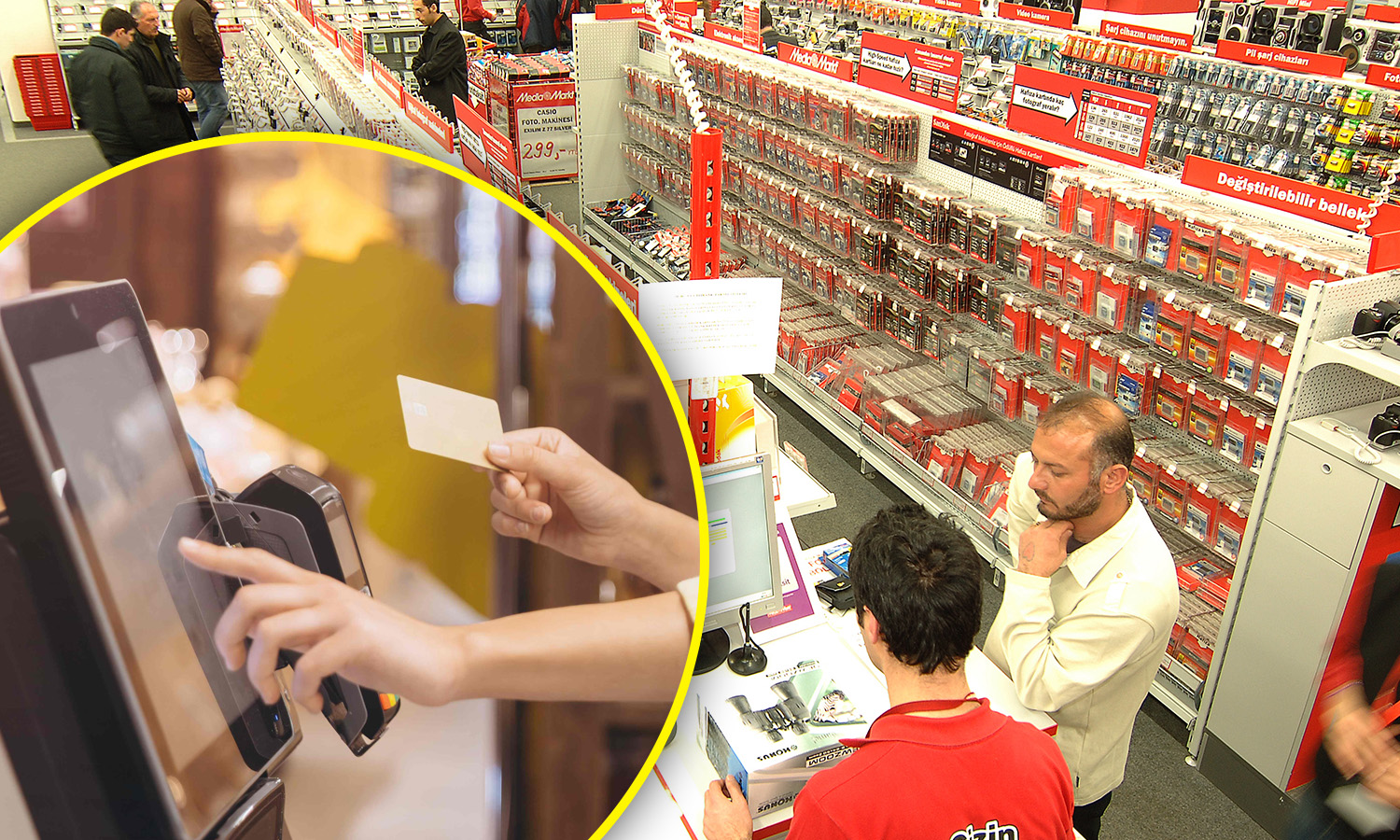
Maciej Dolega, head of PR at MediaMarkt Polska, did not break away from this rhetoric. The manager informed us that his the company does not use self-service checkouts and does not plan to implement them widely. This explains, among other things, electronics are usually higher priced products, some of them have anti-theft protection. Taking them off would still require the help of a store employee. Maciej Dolega also argues that in the stores of this chain the purchasing process includes advice: the customer expects it when choosing equipment, but also when selecting accessories and services, e.g. insurance. The cash register is the point of contact with the customer. There’s something else: global trend analysis.
We are closely observing Western markets (including the USA and Great Britain) and we see that the original enthusiasm of the retail industry towards self-service checkouts is clearly weakening. Many leading retail chains are currently withdrawing from full automation, limiting the number of this type of positions or returning to traditional service. This is due to a drastic increase in the level of the so-called shrinkage (losses due to scanning errors and theft) and decreased customer satisfaction resulting from system errors and lack of support.
In the case of consumer electronics, the financial risk associated with full self-service is disproportionately high compared to the possible time savings. That’s why at MediaMarkt we focus on security, building customer relationships (Customer Experience) and direct support of our advisors, considering this model to be the most valuable in our industry
Taking all this into account, Self-service checkouts should not be expected to appear in electronics stores. Even in a scenario that assumes improving security in this type of equipment and thus limiting the possibility of goods being stolen.