
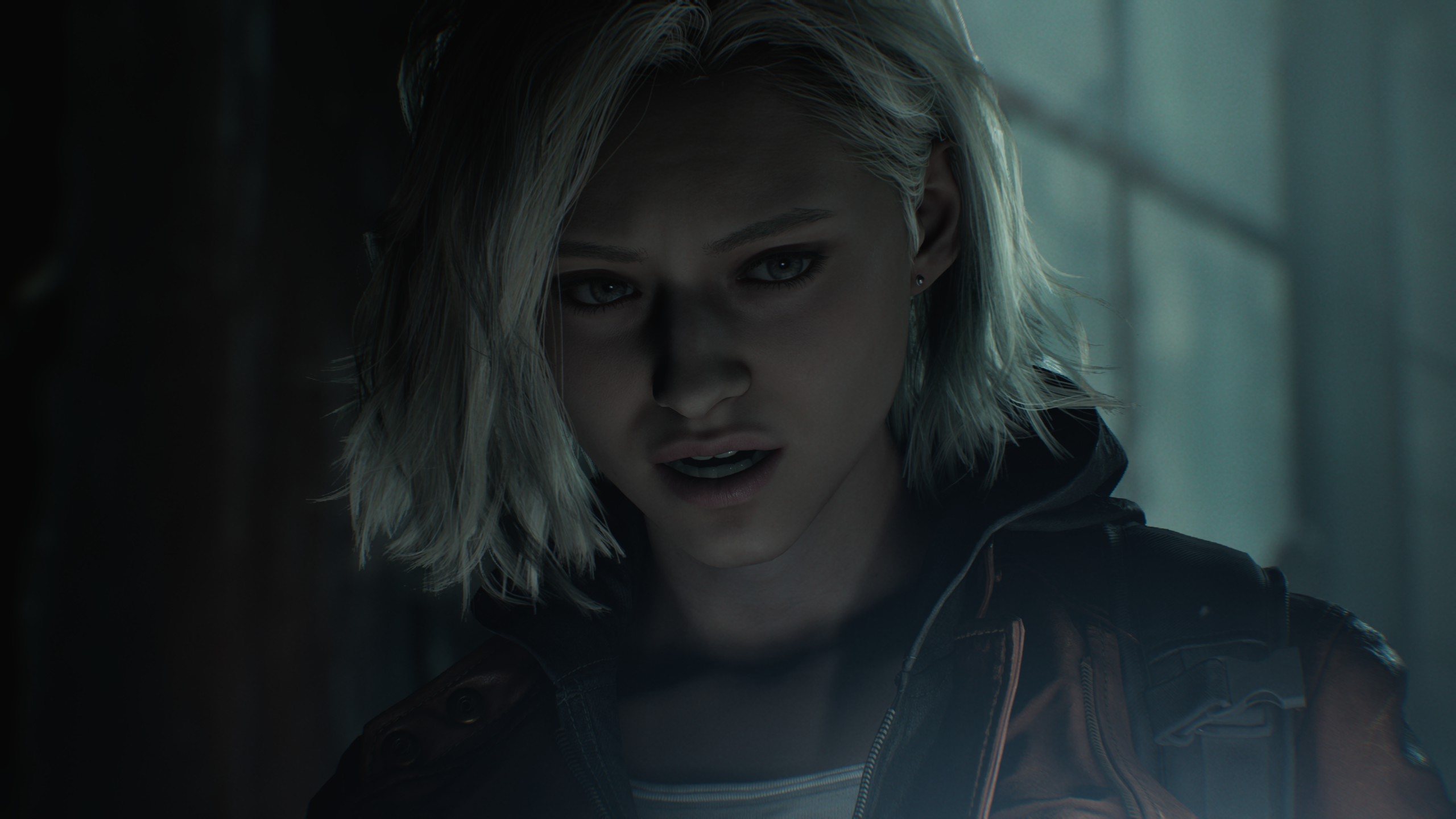
Resident Evil Requiem shows the power of new NVIDIA cards
The new installment of the Resident Evil series hit the market with a bang. Requiem is already considered one of Capcom’s greatest successes in years – both in terms of story and technology. However, the stunning visual effect would not be possible without advanced NVIDIA graphics technologies and GeForce RTX cards, including those from the latest 50 series.
Capcom hits the mark again
Resident Evil Requiem, the ninth main part of the series, was released on February 27 and quickly gained great reviews. The average rating on Metacritic has stopped at 88 points – this is currently the highest result of 2026. Journalists praise the exciting, dark story, varied gameplay, and masterful atmosphere building.
Visually, the game is a real demonstration of the capabilities of modern graphics engines. Great lighting, realistic reflections and smooth animation are thanks not only to Capcom, but also to NVIDIA – the manufacturer of the solutions behind its impressive setting. Thanks to the support of GeForce RTX 50 and the older, still very efficient RTX 40 family, the world of Resident Evil Requiem makes a spectacular impression. For many gamers, the ideal solution will be Gainward GeForce RTX 5070 Ti graphics cards, which are the golden mean between performance and price.
Long-term cooperation between Capcom and NVIDIA
The partnership between the two companies is not new. NVIDIA technologies have already enriched earlier titles in the series – including Village and the remakes of “2” and “3”. Requiem refined this combination to perfection. Players can use features such as Ray Tracing, Path Tracing, DLSS with Ray Reconstruction technology, as well as Reflex and the latest Multi Frame Generation x4.
Light realism – Ray Tracing and Path Tracing
Ray Tracing is an advanced rendering method that reproduces the behavior of light in a way that is close to what we know from reality. GeForce RTX graphics cards are equipped with special RT cores that calculate the direction and reflection of rays in real time, thanks to which lighting effects, shadows and reflections look natural.
In Requiem, this technology gives scenes a depth and realism that perfectly matches the atmosphere of horror. I assure you that you will often be frightened by, for example, the reflection in the main character’s window, which is simply not visible without ray tracing. This perfectly creates an atmosphere of constant threat.
A more refined version – known as Path Tracing – allows for even more accurate reproduction of reflections and scattering. In practice, this means that we see not only light sources in glass surfaces, but also entire parts of rooms, which significantly increases the level of immersion.
DLSS and smooth gameplay
The second key NVIDIA technology is DLSS, or Deep Learning Super Sampling. This is a set of artificial intelligence-based tools that increase the number of frames and improve image quality.
The basic function of NVIDIA DLSS is that the GPU renders the image at a lower resolution, and then machine learning algorithms “pull it up” to a higher resolution – thanks to which the game runs faster, without losing sharpness. In tests conducted on a computer with a GeForce RTX 5080 card, an Intel Core i7-13700K processor and 32 GB DDR5 RAM, Requiem at 1440p and ultra settings achieved approximately 80-90 fps with Ray Tracing active. After enabling DLSS in quality mode, the frame rate increased to 120-130 fps.
Multi Frame Generation brings an even greater effect, which inserts three additional frames instead of one. As a result, you can get up to 250-260 fps on the same hardware, while maintaining full animation smoothness and without any artifacts.
It is impossible to ignore the issue of the latest version of NVIDIA DLSS 4.5 with the new Transformer 2.0 model. This, above all, significantly improves the quality of the rendered image. Moreover, in the near future, it will also allow you to enable Frame Generation in the x6 version (up to 5 additional frames). Another new feature will be the Dynamic Frame Generator, which will adjust their number in real time to best match the image smoothness to the monitor’s refresh rate.
Reflex and Ray Reconstruction – the details that make the difference
NVIDIA also added further improvements. Ray Reconstruction improves image quality when ray tracing is enabled, reducing noise and enhancing contrast. Reflex, on the other hand, minimizes the delays between the player’s movement and the game’s response, which is of great importance in tense and dynamic moments – especially when hordes of zombies attack the screen.
Technology in the service of emotions
The use of the full suite of NVIDIA technologies makes Resident Evil Requiem a visual and technical demonstration of the capabilities of the new hardware. The combination of Ray Tracing, Path Tracing, DLSS with Multi Frame Generation and Reflex guarantees extremely smooth, spectacular and intense gameplay that is hard to resist.
Importantly, when purchasing GeForce RTX 50 graphics cards, as well as computers and laptops equipped with such models, you can get the Resident Evil Requiem game for free. It is worth taking an interest primarily in models from the Gainward GeForce RTX 5070 Ti series, which are not only characterized by enormous capabilities, but also by an attractive price.
Sponsored article commissioned by Gainward and NVIDIA.


