
Good news for monitor buyers. The market is changing for the better
More QD-OLED monitors, fewer LCDs
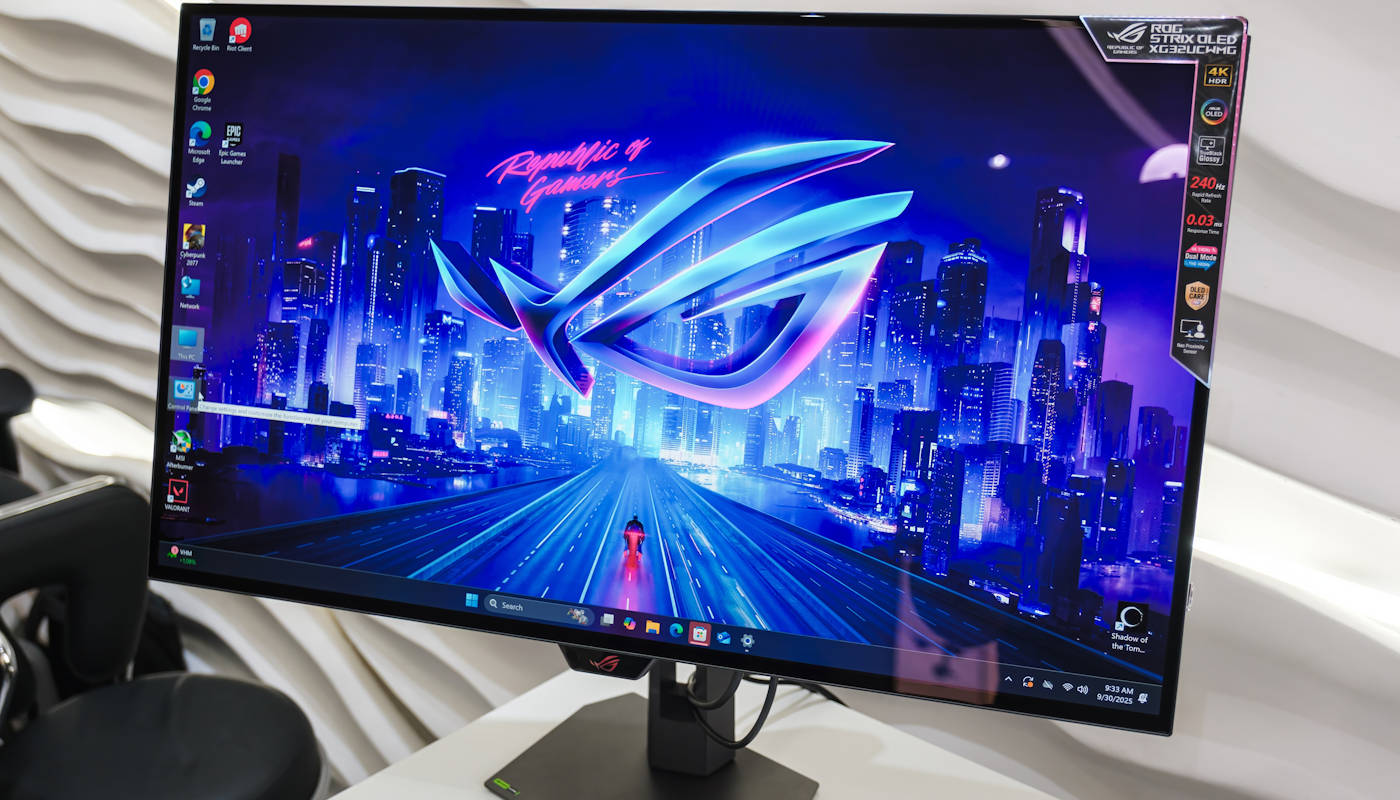
A year ago, Samsung Display announced an ambitious plan – to increase the supply of QD-OLED panels for monitors by over 50% compared to 2024. Reality exceeded expectations – according to UBI Research, the entire OLED monitor panel market grew by 64% in 2025, reaching 3.2 million units. Samsung controls as much as three-quarters of this market, supplying 2.5 million panels to other manufacturers on its own. These include ASUS, MSI and Gigabyte.
This is not a random coincidence – it is the result of a conscious business decision. Samsung Display has deliberately shifted priorities from TVs to monitors, because high-end screens for gamers/professionals are sold with a much higher margin than TV panels. The move turned out to be a hit. Demand is growing faster than factories can keep up with production.
For 2026, the forecasts are equally optimistic. Analysts estimate that global shipments of OLED monitors will reach 5 million units – another 56% increase year-on-year. Omdia points out that the share of self-emitting panels in the premium segment (monitors over USD 500) increased from 14% in 2024 to 23% in 2025. By the end of 2026 it is expected to reach 27%. In such conditions, it will be increasingly difficult for LCD monitors to defend themselves – and certainly for higher-end models.
Samsung is not slowing down technologically either. In early 2026, the company launched mass production of a 34-inch QD-OLED panel with a 360 Hz refresh rate with a new V-Stripe subpixel structure that significantly improves text readability – a problem that has been OLED’s Achilles heel in office applications for years. Peak brightness reaches 1,300 nits.
And here we come to the point – because this trend does not only apply to players with fat wallets. Over the last two decades, TVs and monitors have consistently become cheaper and their quality has increased. Today, for the price you once paid for an average LCD panel, you can buy a MiniLED with decent local dimming. At the price of the former MiniLED – QD-OLED. Gone are the poor VA and IPS matrices with poor backlighting, which made the image look dull regardless of the settings. More OLED, QD-OLED and MiniLED with true HDR, and everything is getting cheaper. So it’s hard to complain about these trends, because every consumer benefits from it.


