
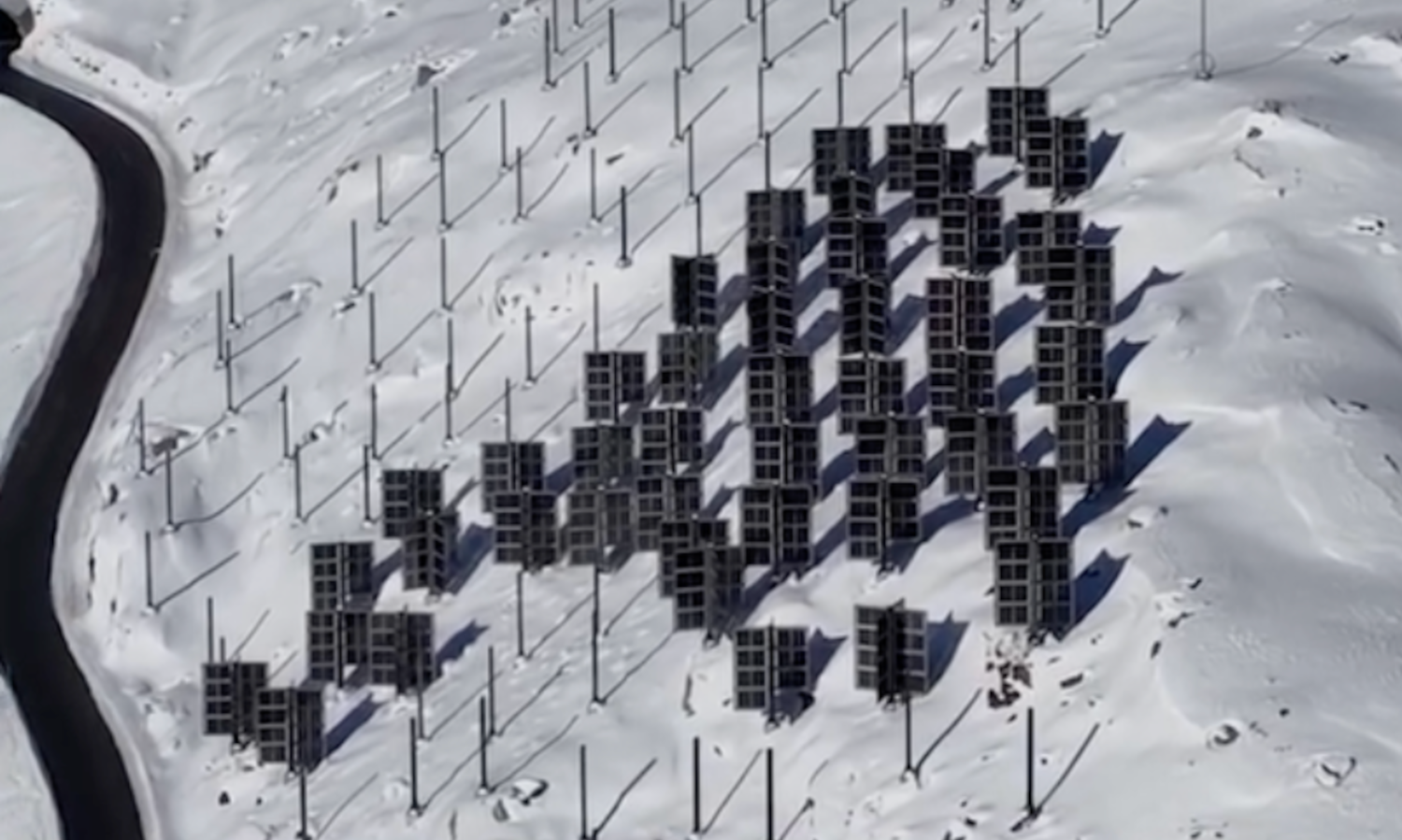
Photovoltaics in the shape of a cross. This is not a desecration, but a revolution
The problem is that snow in the form of blown drifts tends to cover the panels. This, however, makes all other advantages irrelevant. Snow on the panels translates into a lack of light reaching their surface. And the lack of light means no energy generation. The solution to this problem was the cross.
Photovoltaics in the shape of a cross
Helioplant and SolarEdge have developed a new way of constructing photovoltaic panels. These consist of four wings arranged in a cross shape, each with a dozen or so double-sided photovoltaic panels. While such a structure would not make sense lower down as it would shade itself, in high mountains this structure creates small air vortices that make it difficult for snow to settle. Moreover, the resulting depressions in the snow around the panels act as a mirror.
They thus reflect radiation onto their surface, which translates into even higher energy production. As Florian Jamschek, co-founder of Helioplant, emphasized:
Bifacial photovoltaic systems are an ideal solution for alpine regions because they capture both direct sunlight and light reflected from snow. Our cross-shaped design ensures that the modules remain snow-free, helping to meet the high energy demand in ski resorts.
The appropriate inverter is also important here. Well, due to the design, some of the modules will be shaded. The problem is that typical inverters reduce the power of the entire system to the power of the weakest module. That is why it is so important that none of the modules in the photovoltaic installation are in the shade. In this case, each is treated independently by the inverter, which allows you to use the full power of the system.
Currently, the world’s first installation of this type with a capacity of 6.3 MW is being built in the Austrian Alps. It is to consist of 800 cross-shaped structures and generate approximately 28 GWh of electricity annually.


