It looks like a power bank but can see galaxies. Dwarf Mini telescope test
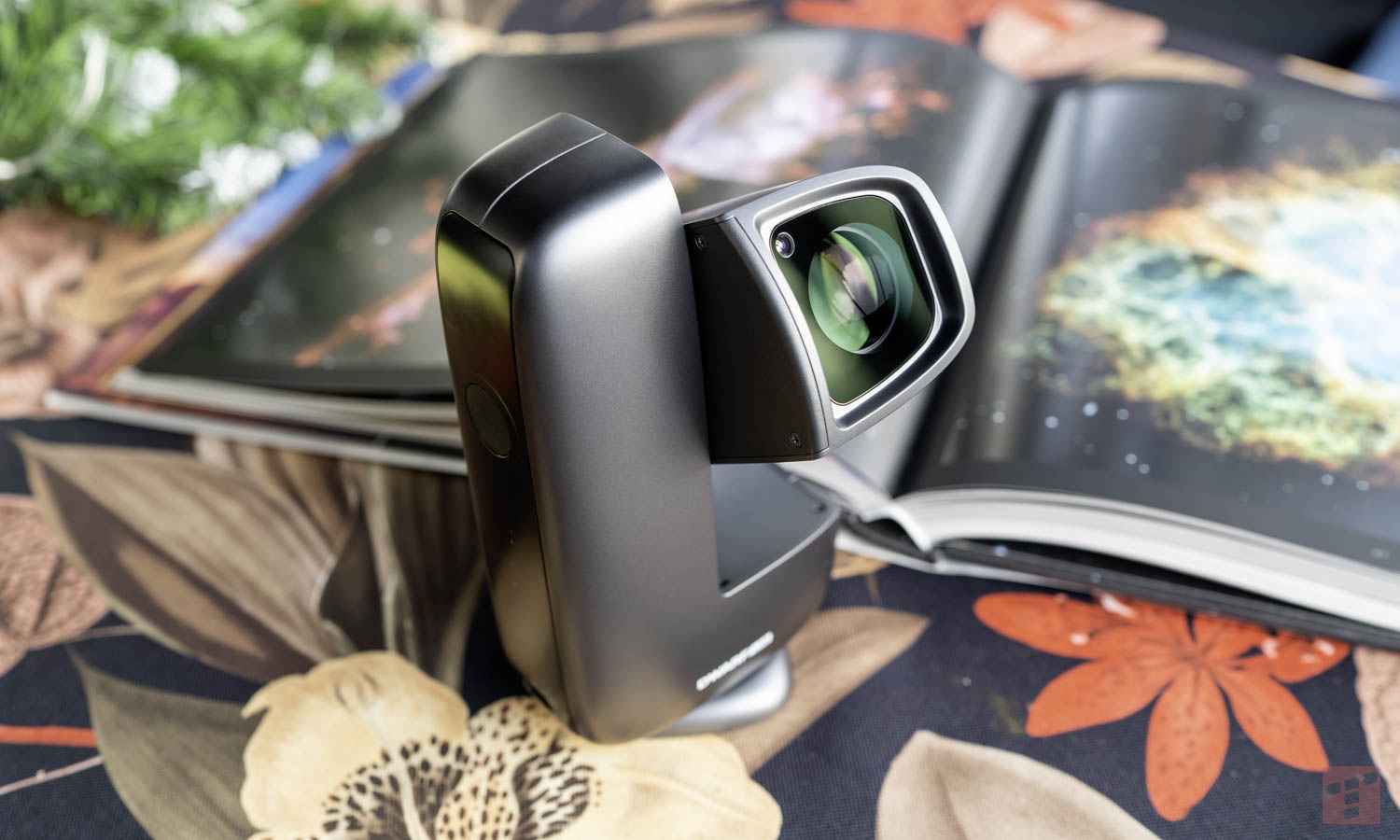
This time I received it for testing smart telescope called Dwarf Mini. This device is not much larger than a modern smartphone, although of course it is much thicker. It reminds me from a distance large power bankwhich could have around 50,000 mAh capacity.
However, it fits in a round, plastic housing smart telescopewhich will successfully capture things in the sky (and beyond) that cannot be seen with the naked eye. That’s the theory. And the practice? You will learn this from the review below, which I invite you to read and comment on.
It really fits in the palm of your hand
First impression after taking Dwarf Mini out of the box? “It Can’t Be a Telescope”. The device is there small and light (weighs only 0.84 kg). It can easily fit into a backpack or even a larger jacket pocket. Thanks to this, you can take it with you on any trip.
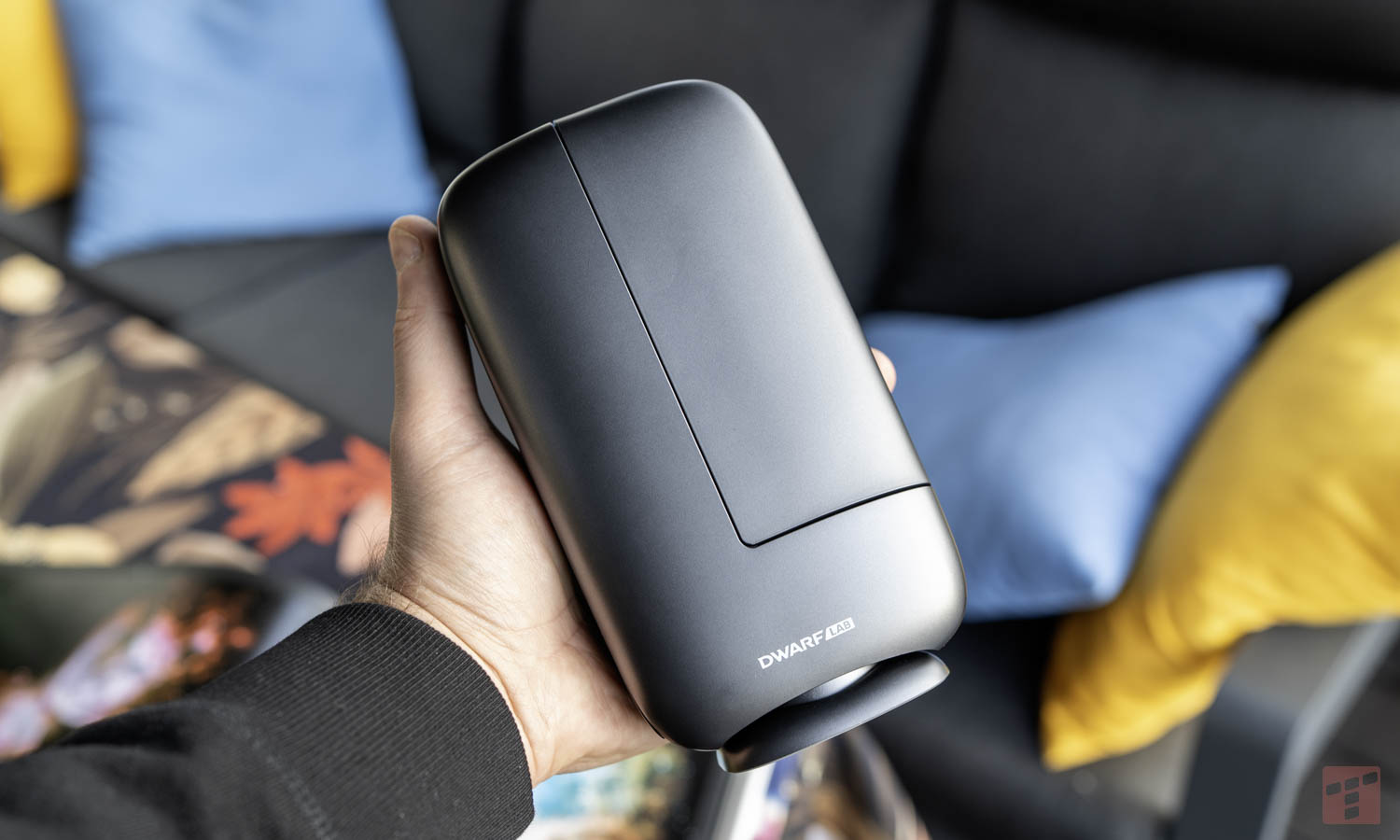
Visually, it resembles a modern surveillance camera or a futuristic gadget from science fiction movies. The design is based on 2-axis gimbalwhich is responsible for precise tracking of objects in the sky. Thanks to the opportunity rotation in two planesthe telescope will reach anywhere.
Specification, i.e. what’s inside
Dwarf Mini does not try to pretend to be a classic optical telescope. This 100% digital device (EAA – Electronically Assisted Astronomy).
The telescope is equipped with:
- Telephoto lens with a diameter of 30 mm and a focal length of 150 mm (equivalent to 1016 mm for full frame), D-2.45 °, H-2.14 °, V-1.20 °, Sony IMX662 matrix (2 Mpix, 1/1.28″, 2.9 μm),
- Built-in filters:
- Dark Frame Filter: Automatically captures dark areas to suppress thermal noise
- astro filter (430-690 nm): enhances the contrast of nebulae by enhancing infrared,
- Dual band filter: optimized for Hα (656.3nm), Hβ (486nm) and O III (500.7nm) to eliminate moonlight and city glare.
- Imaging modes: General, Solar System, Deep Sky.
- Image tracking modes: Alt-Az, EQ (equatorial).
- Auxiliary wide-angle lens 6.7 mm (45 mm equivalent), D-50.59°, H-45.06°, V-25.93°, OS02K10 ½.8” matrix
- Image resolution: 1920 x 1080 pixels (television and wide angle),
- Connectivity: Wi-Fi 2.4/5 GHz, Bluetooth, NFC for quick connection to a smartphone,
- Built-in 7000 mAh battery.
I found it in the telescope box USB-C cable, ND filter for lenses, microfiber cloth and short user manual. Additionally, it was included in the set tripod making it easier to use the telescope.

We start with the application
Dwarf Mini is not a fully stand-alone device. To start using it, you need to install it in your smartphone’s memory DwarfLab application. To do this, you can use the QR codes in the user manual leading to the App Store, Google Play and dwarflab.com. Then we turn on the telescope (button on the housing), we pair it with the application and we can use.
By default, the telescope creates your own Wi-Fi networkto which the smartphone is connected (everything happens automatically). However, it is worth reaching for STA mode and connect Dwarf Mini to your home Wi-Fi network or another one within range. However, it all depends on where we use the telescope.

The application gives us full control over the telescope. From there we can update the device’s firmware or turn off the LEDs showing the status of the device and its battery. In the application we also see the image from both lenses and can take photos.
Astronomy for the “lazy” (and beginners)
One of the app tabs is sky mapwhich needs to be downloaded additionally (but only once). Thanks to it, we can easily and quickly find the object of interest, and the green rectangle will show us the viewing area of the telephoto lens. After selecting an object or area on the map. the telescope will find it in the sky itself and start tracking it.
Now it remains to touch the button on the screen that will start recording photos. By default, the settings (including focus, sensitivity and exposure time) are selected automatically, but we can also control them manually.
When recording subsequent photos, the image on the screen will remain increasingly better quality and contained more and more previously invisible details. The whole process, according to the telescope itself, may take time up to 4 hours. Therefore, it is worth being patient if we want the best results.

However, we do not have to watch the telescope all the time or have the application turned on. Once we start taking photos, we can relax turn off the app and go to sleep. The telescope will take care of the rest, but it’s worth providing it additional power supply. Especially in winter.
We will obtain quite good photos of galaxies and nebulae in a much shorter time. During testing, I only had one clear night, so in order to make the most of it, I limited myself to fate up to about half an hour for each shot. You can spend less time on it, but you have to remember the basic rule: the more time, the better the results.
I took a photo, what next?
We can stop the photo-taking process at any time by holding the shutter button longer. Then comes the process combining all photos into one whole. At this point, the final effect is not impressive and requires further processing. This includes, among other things, getting rid of noise Whether sharpening the shot.
Of course, we can do all this manually by downloading individual shots to the phone and then to the computer and processing them in our favorite editor that can combine many photos into one whole. We can also use the tool Stellar Studiowhich – using an external server – will allow you to execute automatic photo correction. We can also choose alone star correction or denoisingand also remove stars Whether add a watermark. Effects below.
We can download ready-made photos in JPG (approx. 0.5 MB), as uncompressed PNG (approx. 10 MB) or in format FITS (RAW, approx. 12 MB).
The second tool is Mega Stock. It allows you to combine all the photos in a given shot into one whole again. We can also merge photos taken at different timesfor example on consecutive nights.
Here are some photos I managed to take on the only clear night I had during testing. Their quality is, in my opinion, quite good considering the class of equipment and relatively short exposure time. The last “snap” is a photo of the Sun.
I took all of the above photos in Alt-Az object tracking mode. Better results can be obtained in Equatorial (EQ) mode. But then you need to start by setting the telescope in the right position in relation to the Earth’s rotation axis. Of course, the app will help with everything.

Not only the stars, i.e. nature under the microscope
Dwarf Mini is not just a “night owl”. Apart from the photos stars Whether Moonwe can also take photos Sun. In this case, you need to use the one included in the set ND filterwhich will limit the amount of light reaching from our day star and allow for better results.

We can also take photos during the day, observing from a distance birds or other animalswithout scaring them with your presence. It’s a pity that there is no tracking function, as in the slightly more expensive Dwarf 3 model.
Yes, you can also spy on your neighbors. And in addition to taking photos, we can also: record a video or create one time lapse.
A few words about power supply
Dwarf Mini is powered by a built-in 7000 mAh battery. According to the manufacturer, this should be enough for 4 hours of telescope operation. Much depends on the conditions, and more precisely – on the temperature. When I took photos on a frosty January night, I had enough energy for less than 3 hours.

The universe in a pocket format
Dwarf Mini is a modern approach to astronomy that breaks away from the image of heavy and complicated equipment. The device is the size of a power bank, weighs only 0.84 kg and easily fits into a jacket pocket or a small backpack. Despite its compact form, it is fully digital EAA telescope. Thanks to its two-axis gimbal and advanced optics, it allows see objects invisible to the naked eye.
The heart of the device is the Sony IMX662 matrix and a system of two lenses – a telephoto lens for details and a wide-angle lens for orientation in the field. They are an additional advantage built-in filtersincluding an astro and dual-band filter that significantly improves nebula contrast and eliminates urban light pollution.

Dwarf Mini support is in progress entirely via the mobile application. Thanks to the interactive star map, it allows you to: automatic finding and photographing stars and galaxies. The equipment is very good universal. It works not only in astrophotography, but also during the day, allowing you to observe the Sun (with an ND filter) and discreetly observe nature from a long distance without disturbing animals (but without automatic tracking).
To sum up, Dwarf Mini is an intuitive and highly mobile gadget that makes astronomy accessible to everyone. However, it is worth remembering the necessity additional power supply during long, especially frosty sessions.
The device was priced at 417.55 euroswhich when converted into Polish currency gives approximately PLN 1,760. We will buy the tripod that was included in the set approximately PLN 380.

-
Compact dimensions and low weight,
-
Simple, automated operation via the application,
-
Built-in filters,
-
Versatility,
-
Effective tracking of objects in the sky,
-
Decent photo quality,
-
Affordable price in relation to the possibilities.
-
Short battery life, especially at low temperatures,
-
Low matrix resolution,
-
Inability to work without a smartphone or tablet,
-
No AI features like in the slightly more expensive Dwarf 3 model.