
More evidence of a sixth sense. And bad news for people
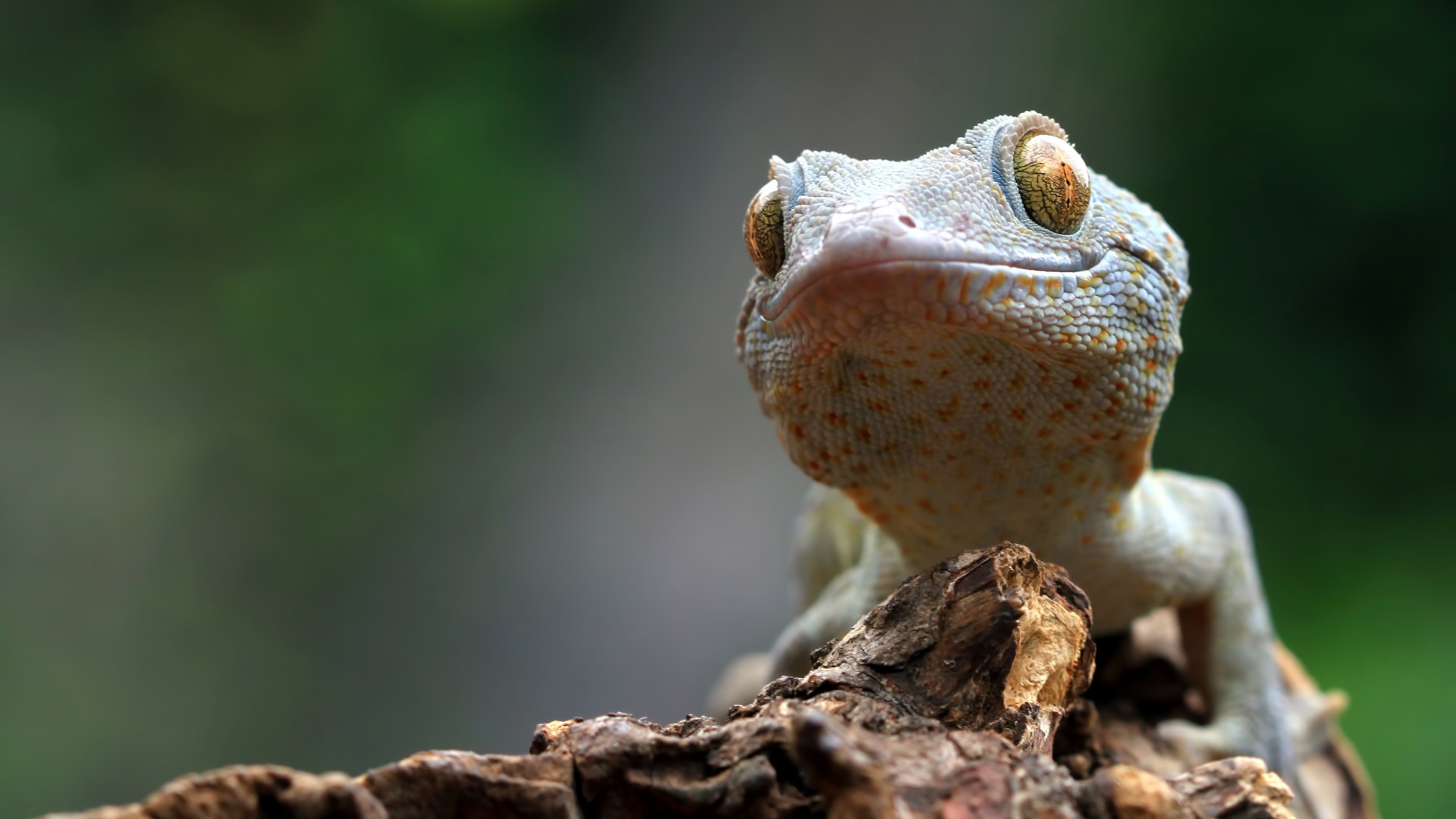
Scientists have been wondering for years what the famous “sixth sense” could be. Two researchers from the USA have just presented the results of research pointing to an interesting clue in this matter. It is related to animals, and more specifically geckos.
Seeing the dead, a matter of premonition – both the world of film and science have ideas for the sixth sense. Now two researchers from the University of Maryland in the USA have also contributed to this topic. Their findings indicate that geckos can sense deep, low vibrations. And without using my hearing. But they’re not the only ones who can do this.
A special path
Sound is a wave that causes the air around us to vibrate. It is thanks to it that sounds reach us. Many animals, of course, boast much better hearing than we do. For example, Tokyo geckos, like other lizards, specialize in high-frequency sounds. They can detect waves with frequencies over 5,000 hertz. But this is not the end of their possibilities. It turns out that without using their hearing, they are also able to detect vibrations ranging from 50 to 200 hertz. How is this possible?
Not everyone knows or remembers from biology that in humans, less than one ear is related to hearing. The bag located in the inner ear helps us, for example, maintain balance. However, it turns out that in fish and amphibians this element is also associated with sounds. However, the latest research indicates that we can also include lizards in this group. Thanks to this, these animals not only detect sound as vibrations in the air, but also in the ground or water surrounding them. Geckos are apparently able to translate ground movement into sound.
This is possible because in the case of these lizards, the sac has a direct connection to a cluster of neurons, called vestibularis ovalis (VeO), in the back of the brain – explains sciencealert.com. The acquired information then goes to the auditory midbrain, where the animal perceives vibrations simultaneously with sound. At the same time, geckos are unable to receive these waves through the “ordinary” path through the ear.
People won’t benefit
However, scientists still have some doubts. It is not known why lizards need such a vibration receptor in their heads. According to researchers, it is possible that geckos use them to detect deteriorating weather such as wind and rain, as well as approaching predators. However, it is known that other reptiles may also use a similar mechanism. A cursory examination revealed that several other species of lizards and snakes also have similar structures in their heads. In this case, it may also turn out to be a new path of communication for many species that were previously considered deaf or mute.
Unfortunately, in humans, the connections between the saccule and the midbrain are much weaker and are thought to primarily play a role in suppressing self-generated sounds and tracking head position.


