
Why do we call an error a “bug”? It’s a funny story
It is common to refer to software errors or hardware problems as bugs, or worms. Where did that name come from? It’s quite an interesting story.
Anyone with even a passing interest in new technology has probably heard the term “bug.” This is what is said when a software error occurs or when hardware has trouble working properly. The term has become a permanent part of everyday speech, but many people may not realize where it came from.
Where does the name bug come from?
The term “bug” is attributed to Grace Hopper, whose name was also used to name one of NVIDIA’s graphics card architectures. In the 1940s she worked on the Mark I computer, and later the Mark II. One of her tasks was to write a book that is now considered the first software manual.
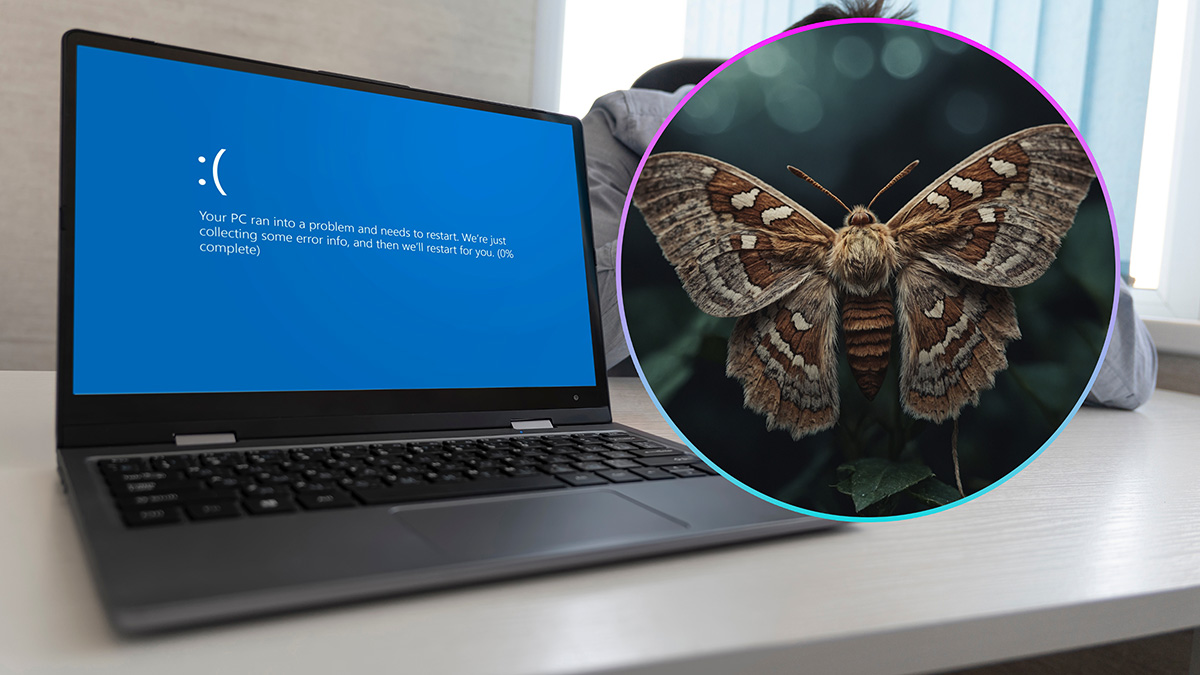
But where did this bug come from? The whole story took place on September 9, 1947. That day, a moth flew into the room where the Mark II computer was working.. Apparently, in those days, no one bothered to properly secure delicate equipment, because the windows were open. Unfortunately, the insect got caught in one of the computer’s relays, which led to the machine’s failure.
It took a while to pinpoint the problem, but eventually engineers, including Grace Hooper, found the unlucky worm. That’s why all problems and errors are called “bugs.” The name comes from a real worm that disrupted the Mark II computer.
You will admit that the story is funny in its own way, but not everyone agrees with it. Some say that the father of this term is Thomas Edison.who in 1873 was working on a telegraph that would allow messages to be sent and received between four devices simultaneously, using a single wire.
However, he ran into a problem with a break in the signal that was caused by a change in the polarity of the electromagnet when the current changed direction. Edison dealt with this problem by building what he later called a “bug trap.” That is why Edison is sometimes credited with first using the word “bug” in the context of a technological error. There is no doubt, however, that the situation with the moth and the Mark II computer sounds much more interesting. I am not surprised that it is more often cited in the context of the term.


