Liquid metal kills. This time it was GeForce RTX 5070 Ti
Liquid metal has been appearing in the most expensive equipment for years as an alternative to classic thermal paste. This solution allows you to significantly reduce GPU or CPU temperatures. However, it is mainly used in structures designed specifically for such a material. DIY modifications can end in disaster, as the owner of the ASUS GeForce RTX 5070 Ti TUF Gaming card found out about.
ASUS did not honor the warranty because the user was at fault
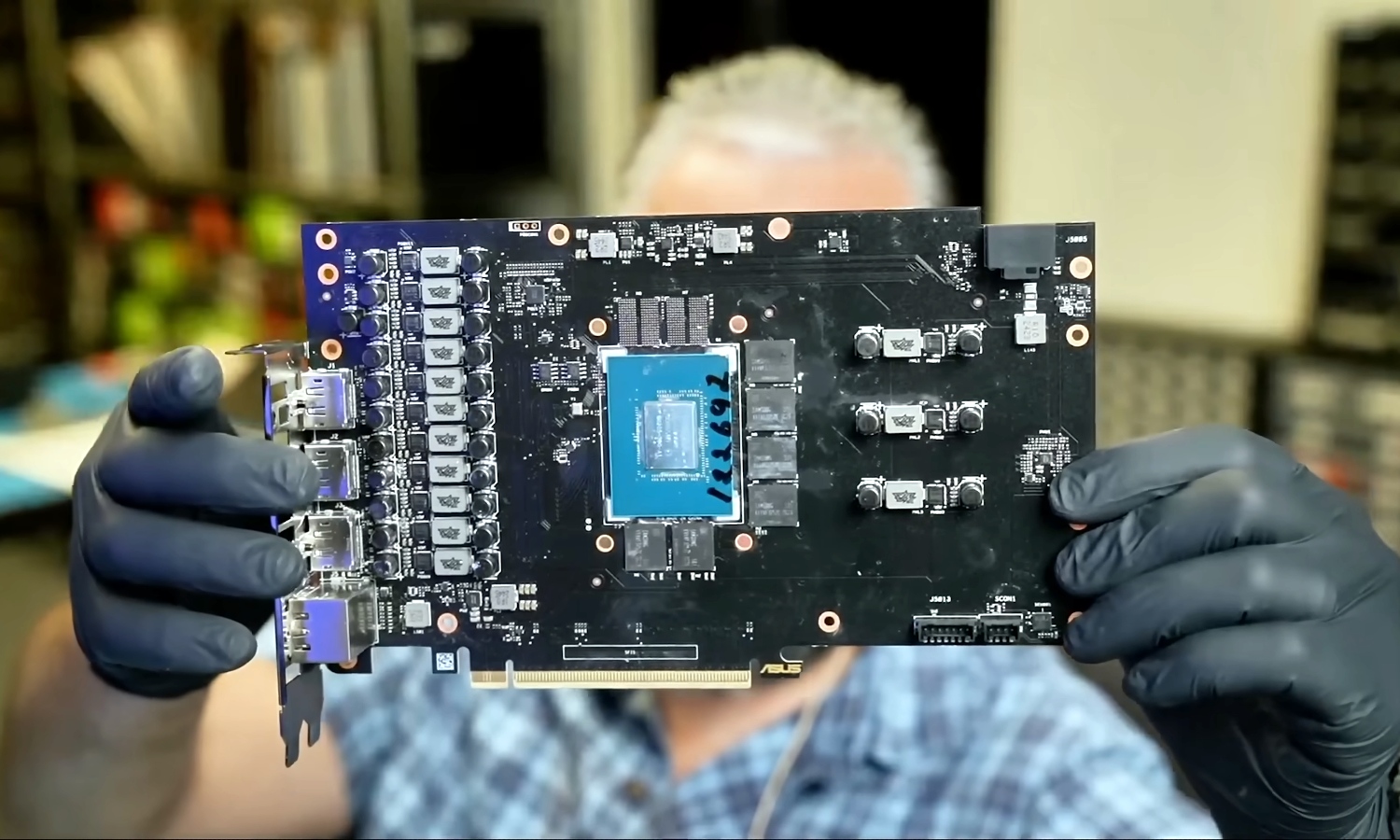
The damaged unit was taken to Northridge Fix, a service specializing in electronics repairs. Unfortunately, it was too late, because the owner’s application of the liquid metal was not performed thoroughly. As a result, it spread over the PCB surface, reaching many elements around the graphics system.
As you can easily guess, liquid metal conducts electricity compared to classic pastes. When it gets on small surface-mounted components such as capacitors or resistors, it leads to short circuits. Additionally, some alloys used in liquid metals can react with aluminum and “eat” the soldering over time.

In the case of this card, the situation turned out to be particularly serious. During disassembly, the technician discovered that liquid metal had seeped into virtually every nook and cranny of the circuit board. The worst thing was that the liquid metal also got under the GPU core, leading to physical cracks in the system. However, the problems do not end there. The DRAM chips were also damaged and the 1.8V power line was shorted to ground.

Of course, ASUS refused to honor the warranty because the damage was caused by the user. Northridge Fix specialists were also unable to repair the system, because not only the GPU had to be replaced, but also the PCB elements – basically, the card would have to be assembled from scratch, reusing “less important” parts such as the cooling system, which is completely unprofitable.