I was in Logitech’s secret labs. The new mouse is a real cosmos
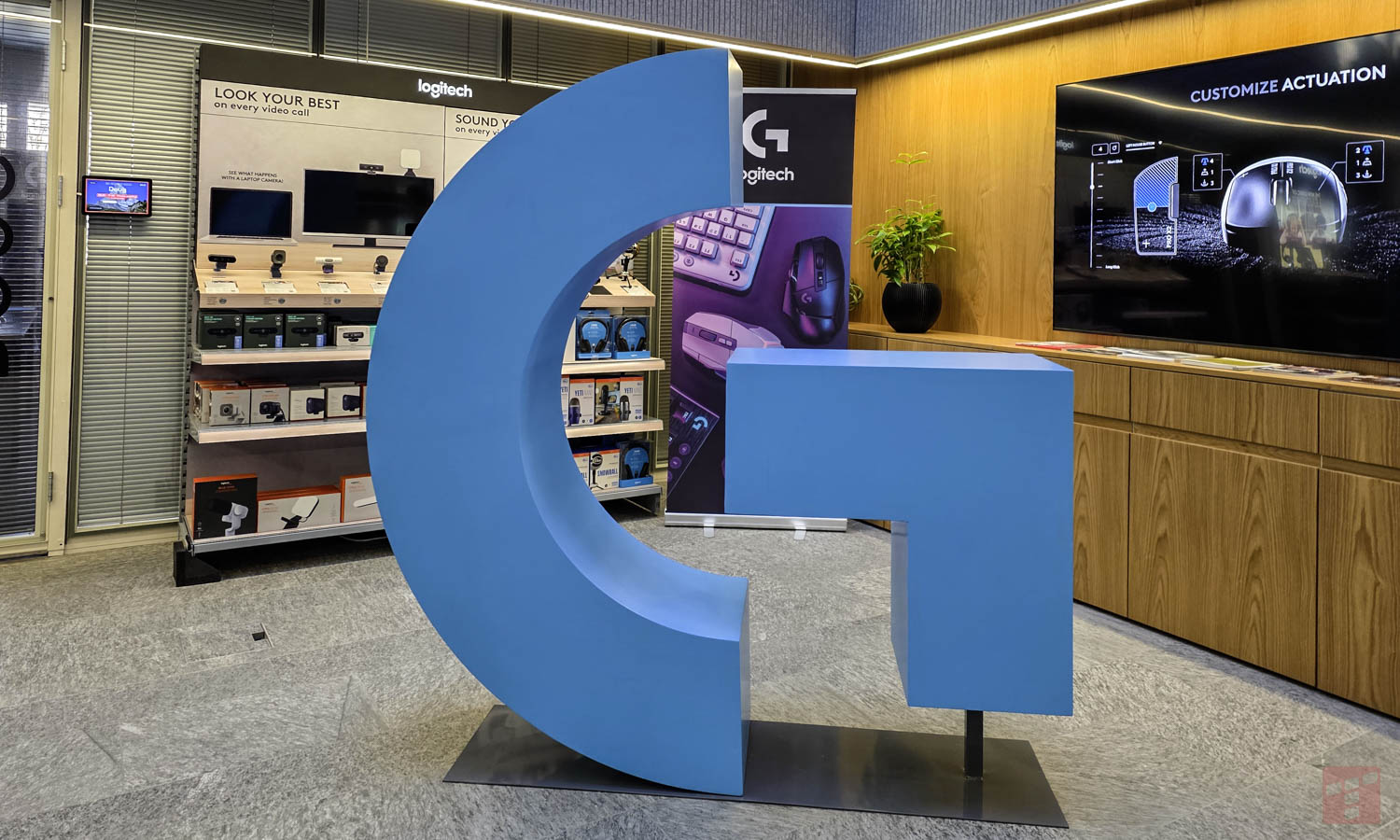
Switzerland is associated with chocolate, watches and banks. But it’s primarily for players Logitech’s house. I was invited to their headquarters for an event “G:Inside”i.e. the first ever “Editor’s Day”. The goal was simple: to show me and other visitors what had been happening behind closed doors over the past months. And there was a lot going on. The company founded in 1981 decided to prove that can still surprise with innovations. The main course was the newest rodent: Logitech G Pro X2 Superstrike. The world premiere starts now, February 10, 2026.
It looks familiar, but it’s a misnomer
At first glance, Superstrike looks like good old Superlight. Why? Because the shape is the same. Engineers and designers assumed that You don’t fix what isn’t broken. This shape is proven, loved by “pros” and it simply works. Change for the sake of change made no sense.
;dc_lat=;dc_rdid=;tag_f.gif)

But what’s most important is inside. The mouse weighs only 61 grams (1 g more than its predecessor). Interestingly, early prototypes weighed 68 gramsbut the team managed to go lower thanks to design optimization. There are no holes in the housing. Logitech firmly believes that holes pose a risk of contamination and durability problems. Instead they “slimmered” the wallswhile maintaining structural integrity. The screws were also replaced with lighter titanium ones.

Revolution at the push of a button. i.e. the HITS system
This is where the magic happens. Forget about ordinary mechanical or even optical switches. Logitech introduced HITS technology – Haptic Inductive Trigger System.
How does it work? It’s pure physics. It is located on the printed circuit board induction coilwhich generates an electromagnetic field. When you press the button, a metal trigger plate moves in this field, disturbing it. The sensor detects these disorders with great precision. The entire button travel is only 0.65 mmand the system shares this distance into 10 separate steps.
This means that the mouse knows exactly where your finger is. There is no physical contact that sends a “click” signal. But you’re about to ask: what about the “feeling” of a click? This is where he comes in LRA (Linear Resonant Actuator) – a small generating motor haptic vibrations. It tricks your brain into giving you the sensation of a physical click at the exact moment of activation.
Rapid Trigger in a mouse? Yes, please
The biggest “gimmick” of this system is Rapid Trigger functionwhich you may associate with expensive keyboards. With a traditional mouse, you have to release the button to a certain point before you can click again. Here? Reset occurs immediately as soon as you start releasing the button.
This opens up amazing possibilities. You can set the activation very shallow, at level 1, or deep, at level 10, to avoid accidental shots. Each button can be configured separately. League of Legends players set the right button to maximum sensitivity for movement, and the left button to “harder” so as not to waste “skills”.

Numbers that make a difference
Logitech boasts that Superstrike reduces latency by up to 30 milliseconds. They did well in the tests up to 36 ms. But the most interesting thing is who it helps.
During tests with 40 professionals and amateurs, it turned out that new technology acts as an “equalizer of opportunities”. Professionals gained an average of 15 ms, but “mere mortals” (non-pros) they gained as much as 26 ms. Why? Because amateurs have slower finger motor skills, and the inductive sensor detects their intention much faster than a regular switch. The mouse makes up for what you lack in reflexes.
In CPS (Clicks Per Second) tests, players extracted 10% more clicks. In LoL this translated to 6% higher APM (Actions Per Minute) at the first contact with the mouse.
A visit to the “room of silence”
Part of the tour of the Lausanne headquarters included going underground to the laboratories. It makes the greatest impression RF anechoic chamber (Radio Frequency). This is where engineers fight the player’s biggest enemy, i.e. interference.
Today’s homes are radio “crowded”. Wi-Fi, phones, Bluetooth – it’s all humming. Logitech tests mice in the worst possible scenarios. The mouse communicates with the receiver with a frequency of 8000 Hz (8K polling rate). Importantly, the sensor and radio communication are synchronized – there is no bullshit where the sensor works slower and the radio sends empty data packets.
An interesting fact is that it is in Superstrike only one antenna. Thanks to clever engineering, it works omnidirectionally, so it doesn’t matter how you hold the mouse or where the computer is placed – the signal should be stable.
Tests, tests, tests…
Before a new computer mouse is delivered as a finished product to users, it is subjected to many different tests. Is pressed, rotated and subjected to high overloads. All this to ensure that the final product works in all conditions. It has to be fast, precise and durable.
A few words about ergonomics
How does the form of a gaming mouse relate to ergonomics? Nice ladies from Logitech, who deal with this every day, tried to answer this question. One of them, having many special sensors on her body, showed it to us on the screen. It turned out that Using the new Pro X2 Superstrike requires only minimal effort. Long hours of gaming will not be tiring because of the “rodent”.


However, such a mouse is not necessarily ergonomic. As it turns out, the structure of the human hand, or more precisely the forearm with two long bones, “prefers” using a vertical mouse. This is when the hand position is the most natural. When we use a horizontal mouse, and all (or almost all) gaming mice have this construction, the ulna and radius bones cross. This can have painful consequences in the long run.
However, what is ergonomic is not necessarily what is best for gamers. Especially when precision and speed are involved.
Wood carving, or how a mouse is made
The last stop was the design studio they call themselves “Lab form of the artist”. Here, technology gives way to craftsmanship.
Nick, the head of design, showed us what it looks like behind the scenes. Instead of just sitting in front of a computer, designers they carve prototypes by hand in special chemical foam (chemical wood). Why? Because you can’t cheat your hand on the monitor screen. You need to feel the shape. It’s only when the physical model fits perfectly in your hand that it is scanned in 3D and sent to CAD programs.


Logitech is also experimenting with materials. I saw for example cork prototypes. Yes, cork. For now, this is just a “provocation” and testing the ground for more ecological materials, but who knows – maybe in a few years plastic will become a thing of the past.
Design by Collaboration – it’s not just a slogan
We often hear marketing talk about “collaboration with players.” But here I saw hard evidence. Involved in the creation process of Superstrike over 222 professional players.
These are not surveys sent by email. Logitech organizes workshops to which it brings dozens of players (recently 64 people) to its office. They hook them up to sensors, check muscle tension, and track eye movements. This “torture” of players with data allows them understand what really gives you an advantage.

Professional gamers have been using Superstrike prototypes in official tournaments since August 2025, winning MVPs and trophies before the new mouse even had an official name.
Is it worth it?
Logitech G Pro X2 Superstrike is equipment for those who take no prisoners. The HITS and Rapid Trigger induction technology in the mouse is something you can actually feel under your finger. The ability to adjust the “hardness” of the click and the actuation point is a feature that was missing in a market dominated by rigid mechanical solutions.

Will it make you a world champion? Not if you can’t aim. But data from the Lausanne labs clearly show that this equipment removes the hardware barrier. If you lose, it’s your fault.
Is Logitech G Pro X2 Superstrike suitable for “office” work and how does it compare to the MX Master 4 model? You will learn this from my review, which will be published in the near future on TELEPOLIS.PL