Samsung ready for a revolution. New memory in each segment
Samsung used GTC 2026 to present its latest memories. The HBM4 and HBM4E chips attracted the most attention, but the company also showed SOCAMM2, SSD PCIe 6.0 and mobile LPDDR5X and LPDDR6 modules. In other words, the Koreans want to make a strong presence in the entire AI ecosystem, from data centers to personal devices.
The consumer segment received PM9E3 and PM9E1 media
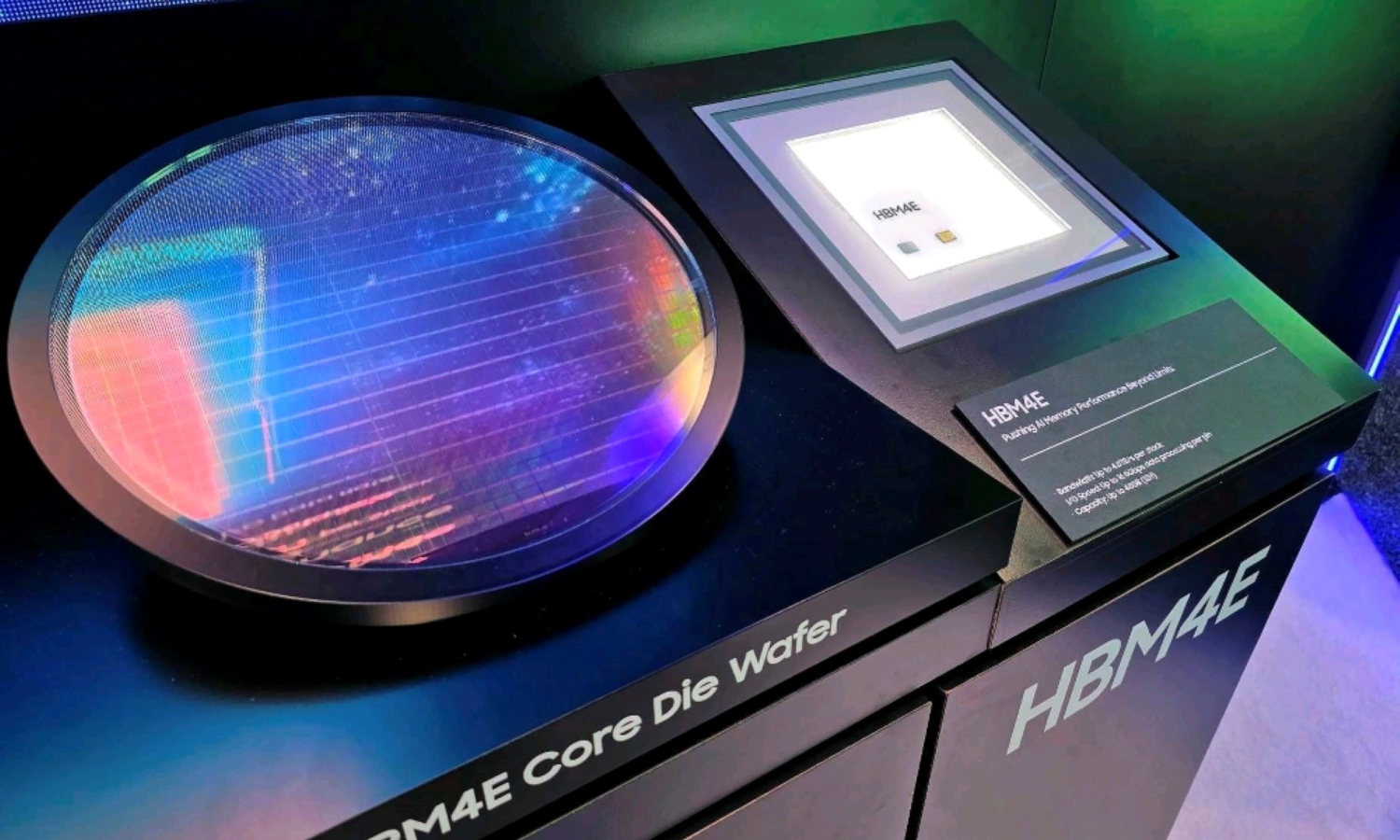
The most interesting one is HBM4E, the next generation of high-bandwidth memory for artificial intelligence accelerators. Samsung talks about speeds of 16 Gb/s per pin, bandwidth of up to 4 TB/s per stack and 16-Hi designs that will offer up to 48 GB per die. Such parameters are intended to be particularly well suited to the NVIDIA Rubin Ultra platform.

In parallel, the company is also developing HBM4 for the NVIDIA Vera Rubin platform. Chaebol declares that the memory is already in mass production and is expected to provide transfers of up to 11.7 Gb/s, with the possibility of increasing it to 13 Gb/s, which clearly exceeds the current market standard of 8 Gb/s. The manufacturer emphasizes that it uses the most advanced 10 nm DRAM lithography.

The fair also saw the Hybrid Copper Bonding technology, which is intended to help build the next generations of HBM. The new method of combining layers allows you to create systems with 16+ layers and at the same time reduce thermal resistance by over 20% compared to the older TCB approach. This is important because with such high memory density and bandwidth, the issue of temperatures becomes one of the key limitations.
Samsung also boasted SOCAMM2 modules, which are intended to ensure high throughput and flexible integration in AI servers, as well as PM1763 and PM1753 drives for next-generation infrastructure. The goal is to improve both performance and energy efficiency in model training and inference workloads.

It doesn’t end there, because the manufacturer also showed solutions for consumer equipment and local AI applications. These included PM9E3 and PM9E1 media and LPDDR5X and LPDDR6 memories for wearable devices. LPDDR5X is expected to offer up to 25 Gb/s per pin with lower power consumption, and LPDDR6 is expected to increase bandwidth to 30-35 Gb/s per pin. More detailed specifications will be revealed at a later date.